

CASE STUDY
Building Science Issues

Building Science Issue (Attic)
| Client | Upscale Custom Home Builder |
| Location | Florida Gulf Coast |
| Completion | Sept thru October 2007 |
| Corrections Cost | ~$25,000 |
| Key Project Team | Timothy Toburen |
Overview:
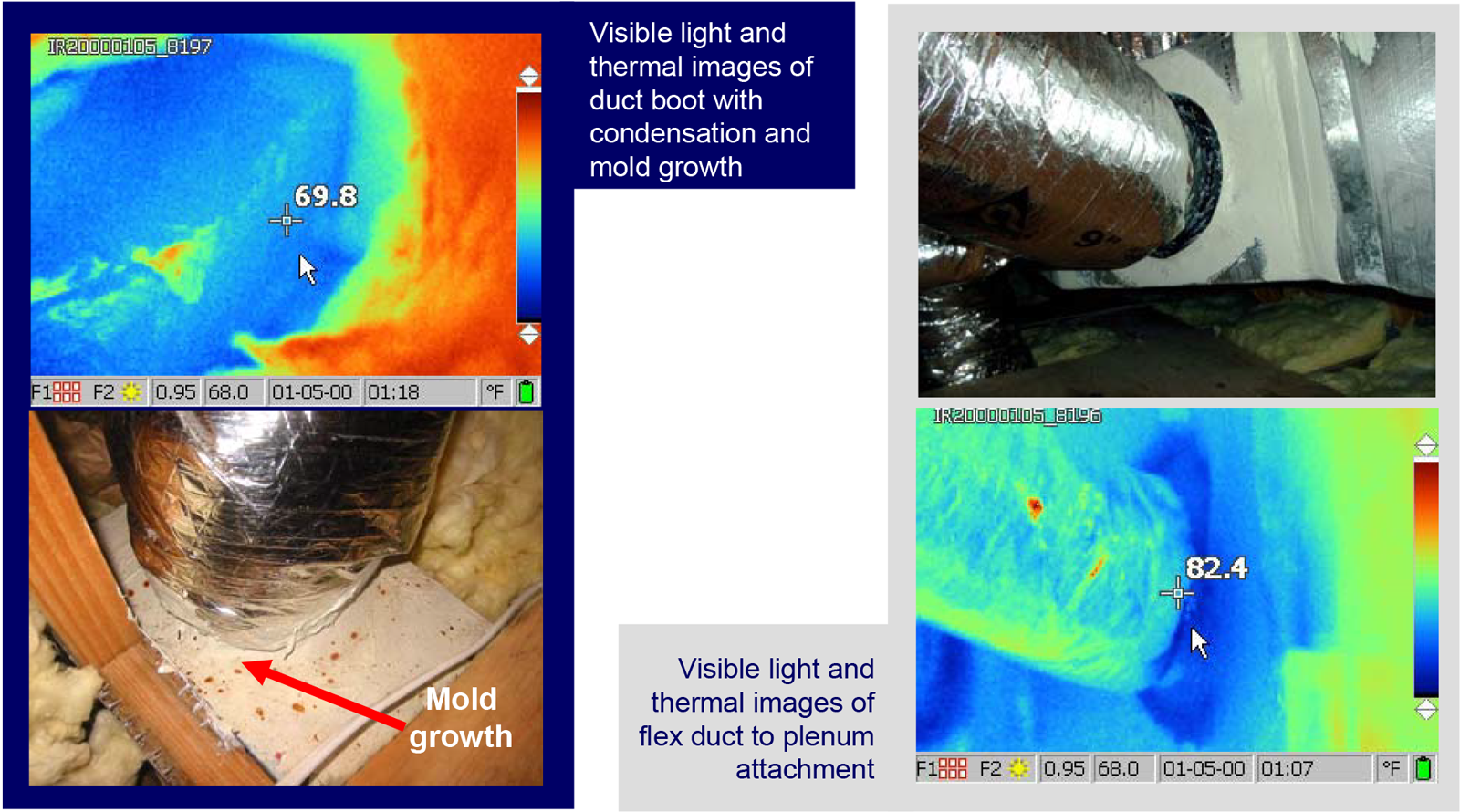
IET was retained by the builder to determine the cause of excessive sweating of HVAC ducting equipment and components in a $3 million home. The residence had been occupied for less than one month. It was also showing elevated humidity conditions in the second story of the home. Mold growth was starting in both the home and the attic.
IET performed thermal imaging, analysis of data-logged temperature/humidity conditions, and analysis of pressure differential between the inside of the home and outdoors.
Results: Energy-efficiency measures taken during construction had contributed tothe development of “cold attic syndrome,”where air conditioning ducts in a ventilated but cool attic in a hot/humid climate are prone to excessive condensation. Various building design features had contributed to significant negative pressure and infiltration of exterior humid air into the occupied space, resulting in excessive humidity in the home and in interior wall cavities.
Recommendations: Seal the attic from outside air. Install a dehumidifier in the attic to control humidity. Install a separate ventilation air dehumidifier to ensure positive pressure in the occupied space and help control interior humidity.
See “Cold Attic Syndrome: A Case Study of Unintended Consequences” in the Articles section of this website for more information on this project.
Building Science Issue (Crawlspace)
| Client | Homeowner |
| Location | Florida Gulf Coast |
| Completion | Feb thru March 2006 |
| Corrections Cost | c. $10,000 |
| Key Project Team | Timothy Toburen |
Overview:
IET was retained by the homeowner to determine the cause of extensive mold growth and beginning decay in the ventilated crawlspace of his 10-year-old home.
IET performed visual inspection inside and outside, as well as thermal imaging and moisture mapping in the crawlspace.
Results of inspection: Landscaping deficiencies had resulted in foundation perimeter walls being saturated with water. When this water evaporated into the interior, the relative humidity of the crawlspace went up. The situation was worsened by multiple HVAC supply line leaks into the crawlspace from a recently installed duct system. Little effort had been made to seal the duct boots to the sub-floor. Cold air leaking into the crawlspace reduced the temperature of that area, raising the relative humidity.
Recommendations for correction: Carefully seal all duct boot connections. Modify landscaping and site drainage to divert water well away from the foundation.


Secure Your Property’s Health Today

Don't leave your health or property value to chance. Get the scientific data you need with Central Florida’s most thorough environmental assessments. Contact our certified experts today for total peace of mind.