

How Water Damage Timing Gets Documented in a Florida Insurance Claim
Most disputed water damage claims come down to one question: did this happen suddenly, or did it develop over time? Your policy covers sudden and accidental damage, making the timeline the central focus for both you and your insurer.
I’m Matthew Fitzgerald (MRSA5590) with Indoor Environmental Technologies. Our team has documented moisture and indoor environmental conditions across Tampa Bay and the Gulf Coast since 1992. Water leaves measurable physical evidence of how long it sat in your home. This guide explains how to document that timeline, the tools needed to record it, and how this information supports your insurance claim.
Why Timing Decides the Outcome
A standard Florida homeowners policy covers water damage that is sudden and accidental. Gradual deterioration, long-term seepage, and wear and tear generally require different policy considerations.
When an adjuster describes a loss as long-term, and the homeowner describes the same loss as a pipe that failed on Tuesday, both parties are discussing duration. The policy language, the insurer’s response, and any later review all focus on this specific detail.
Duration leaves physical traces. Water moves through building materials at rates that depend on the material, the volume, and the time available. Biological growth also follows its own schedule. We can measure and record both elements while they’re still present.
What Water Leaves Behind That Carries a Timeline
Water changes the building it sits in at known, predictable rates. The contamination level, distance traveled, moisture content measured against unaffected reference points, and biological growth each move on their own schedule. When read together, these factors give a solid range for how long the water was present.
How Contaminated the Water Has Become
The restoration industry classifies water by contamination under the American National Standards Institute and Institute of Inspection, Cleaning and Restoration Certification (ANSI/IICRC) S500 standard. Category 1 comes from a sanitary source such as a supply line. Category 2 carries significant contamination. Category 3 is grossly contaminated and includes sewage and floodwater.
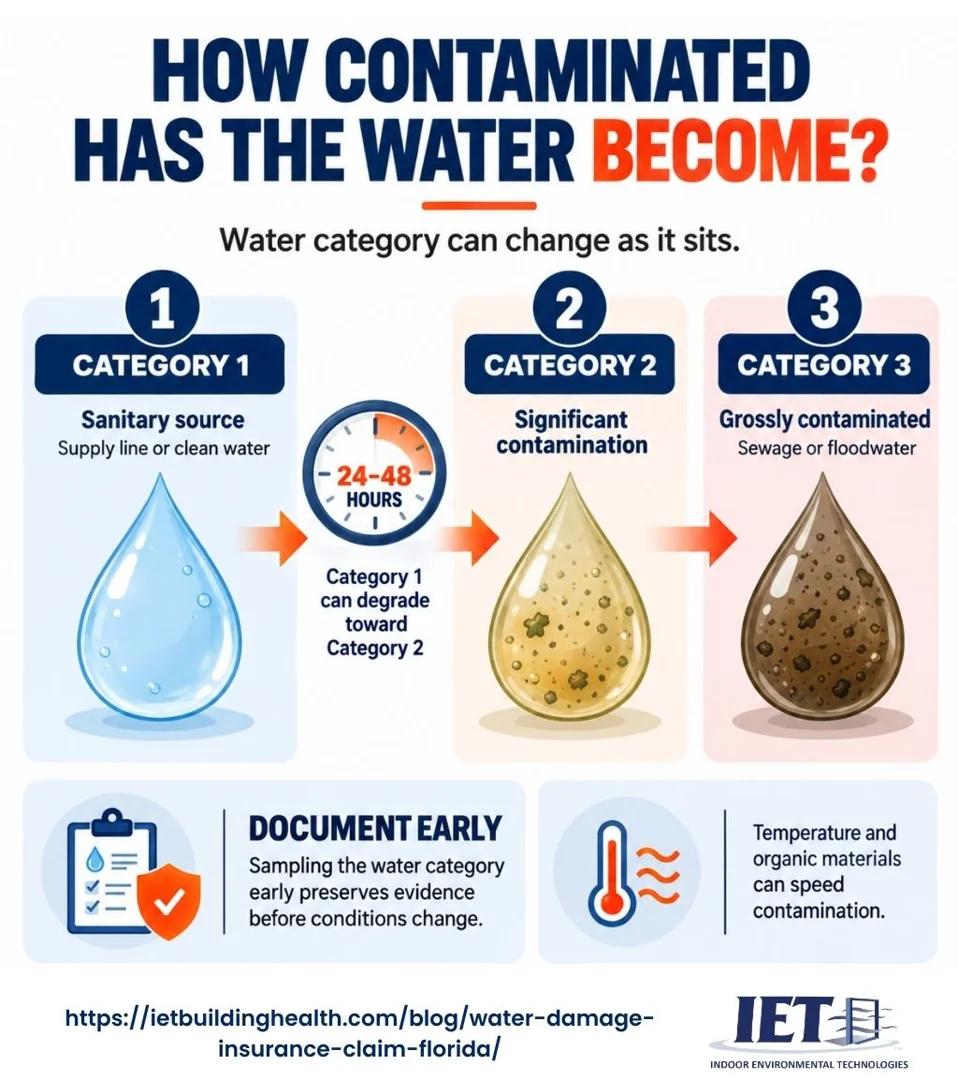
The useful part for a claim is how these categories shift with time. Under the S500 standard, Category 1 water left in a structure degrades toward Category 2 within roughly 24 to 48 hours of dwell time, and Category 2 degrades further from there. The pace depends on ambient temperature and the organic content of the materials it’s sitting in.
That gives you a measurable clock. Water from a supply line that still tests as Category 1 is consistent with a recent event, while the same source testing as Category 2 or 3 indicates it sat for a longer period. Sampling and documenting the category early captures a reading that changes on its own within days.
How Far the Water Traveled
The same standard separates contamination from the extent of the damage. Classes 1 through 4 describe how much water the material absorbed and how much evaporation load the drying job carries. These classes range from small affected areas to materials like hardwood, plaster, and concrete slabs that hold moisture deep and release it slowly.
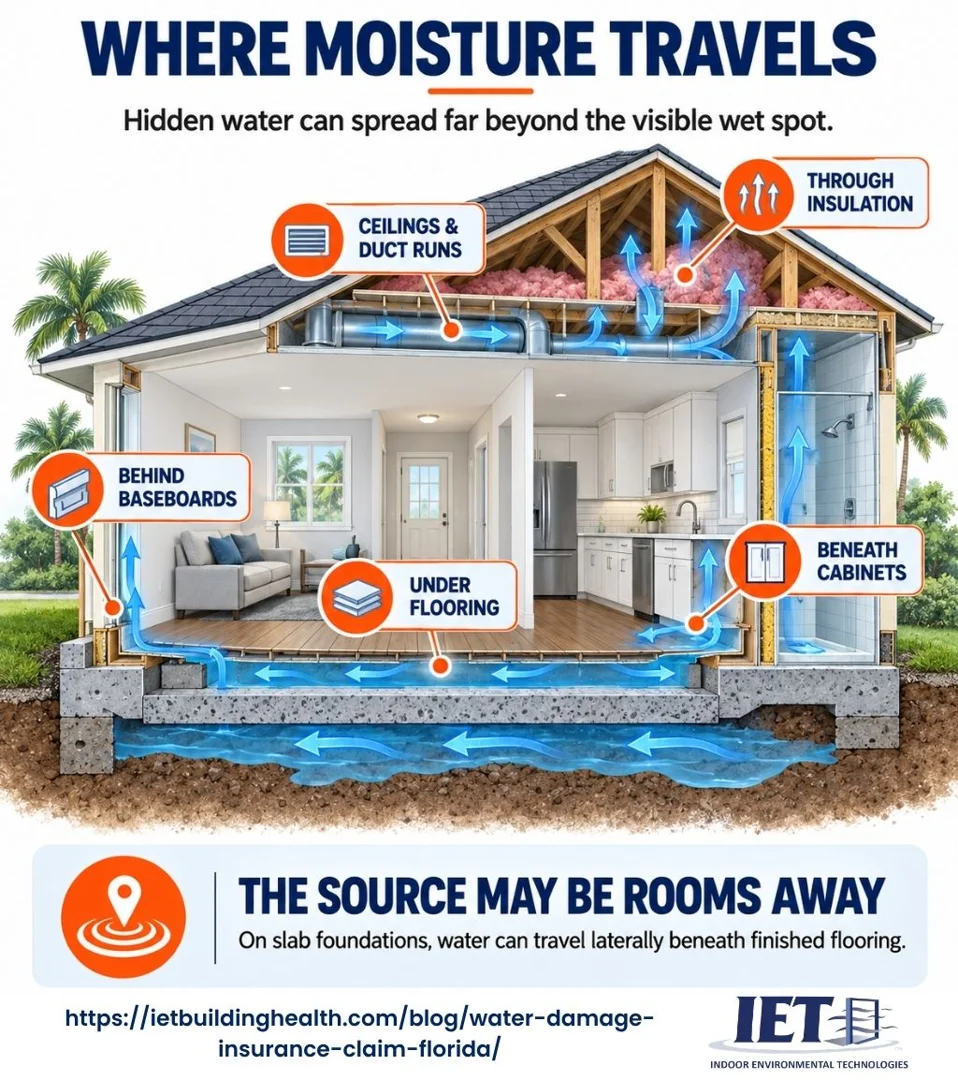
The extent of the spread carries time information because absorption takes time. A supply line break caught within an hour affects a small area. The same break running overnight wicks up drywall, travels along the underside of flooring, and reaches adjoining rooms. Mapping how far the water got, and into which materials, accurately describes how long it had to get there.
Moisture Readings Against Unaffected Material
A single moisture reading provides limited information on its own. A reading compared against the same material in an unaffected part of the same building provides the context that makes it meaningful.
This comparison forms the basis of the drying standard itself, which targets returning affected materials to within a few percentage points of unaffected reference material in the same structure. Taking those paired readings during an assessment records both the degree of saturation and the reference point behind it.
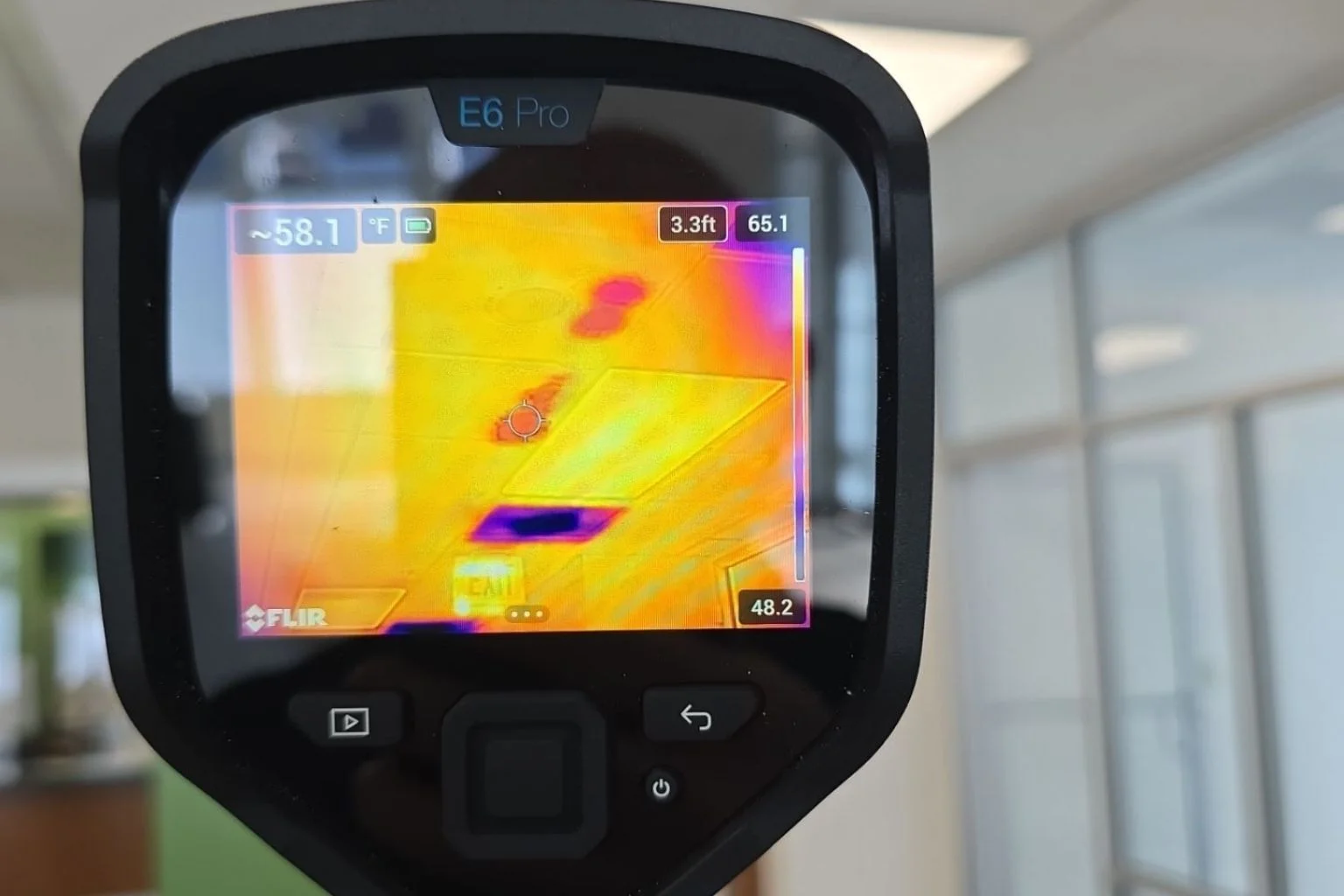
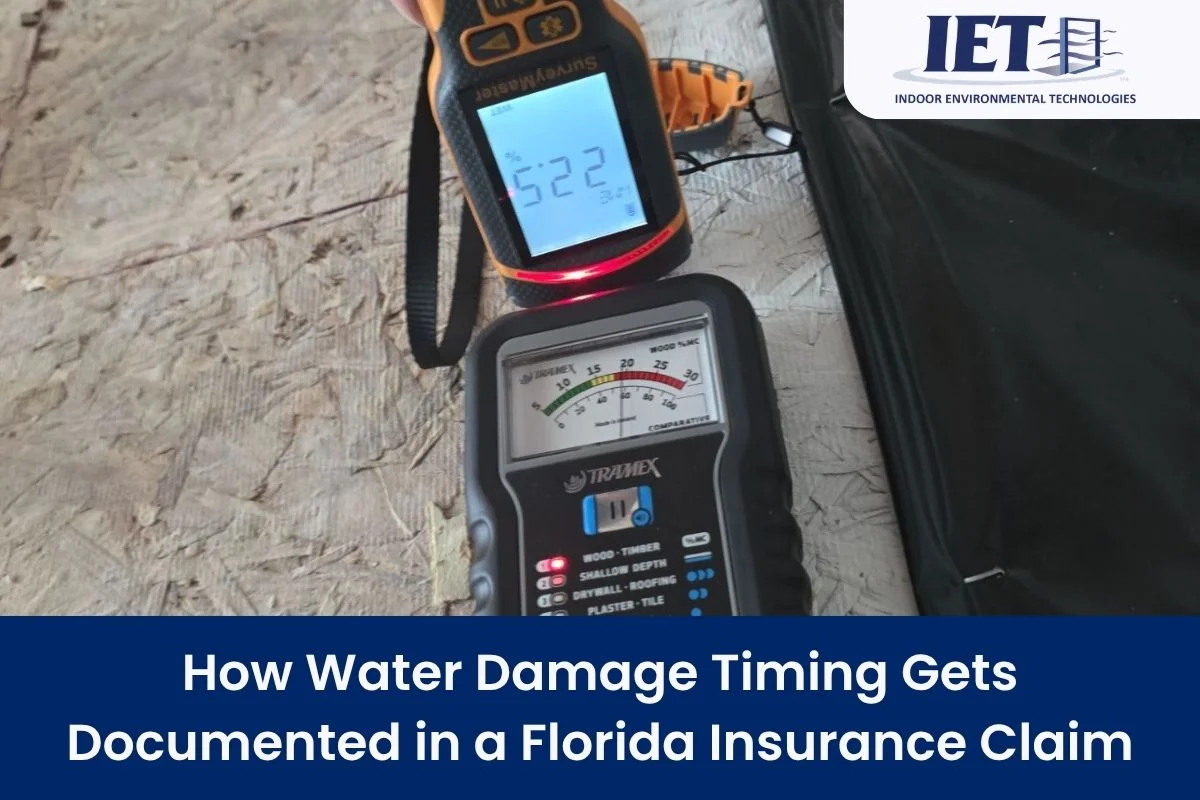
Technicians take readings with pin-type and non-invasive meters, log them by location, and pair them with thermal imaging to show the pattern of migration. A plume spreading from a single point looks different from diffuse dampness across a wall, and that difference shows up in the images.
What Is Growing, and How Far Along
Mold begins developing on damp material within roughly 24 to 48 hours, making the presence of growth a strong indicator of elapsed time. The specific species matter as well. Common early colonizers appear quickly on damp surfaces, while other species associated with heavily water-damaged buildings require sustained saturation of cellulose materials over a longer period. Spore sampling sent for laboratory analysis identifies the species present, which narrows down the window during which the material stayed wet.
The growth stage adds another layer of helpful information. Fresh surface growth and established colonization look different under analysis, and that distinction helps test a proposed timeline.
Tracking the Hidden Water Path
Adjusters, contractors, and homeowners all look at the visible damage, but water frequently travels further. Our building science work covers how moisture moves through Florida building assemblies, and a few paths come up on nearly every job.
Where Moisture Travels in Florida Construction
Water follows the route the building gives it. The common destinations are:
- Wall cavities behind baseboards
- Under flooring and into the subfloor
- Beneath cabinet toe kicks
- Through insulation
- Into ceiling assemblies from above
- Into air handler closets and duct runs
A slab foundation also moves water laterally under finished flooring across considerable distances, so the wet spot you can see and the source may sit rooms apart.
Why Hidden Moisture Changes the Claim
Hidden moisture often causes an estimate to fall short of the repair cost, since a visual inspection produces a limited scope. It also provides an environment for mold to develop out of sight, following a schedule set by how long it stays damp.
The Instruments That Find It
Thermal imaging shows temperature differences created by evaporation, moisture meters confirm the imaging data, and cavity probes reach closed spaces.
What an Environmental Assessment Records
An assessment produces a document other professionals can use, whether that’s a contractor scoping repairs, an adjuster reviewing the file, or an attorney reviewing the case. Its value comes from what goes in it and from who produced it.
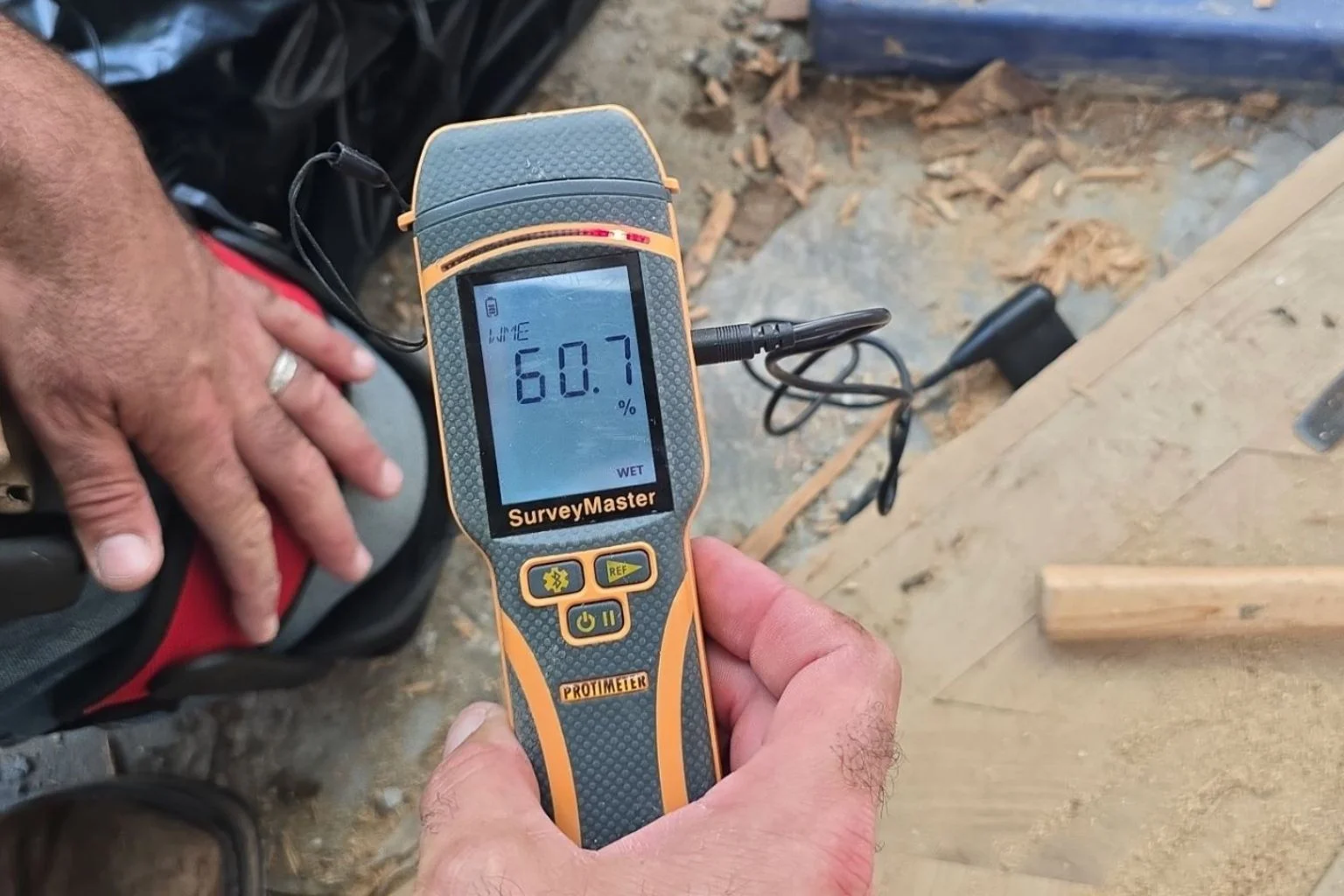
What Goes in the Report
A complete record typically contains:
- Moisture readings logged by location, with paired unaffected reference readings
- Thermal images showing the pattern and reach of migration
- Temperature and relative humidity logged across affected and unaffected areas
- A moisture map describing which materials are involved and to what depth
- Photographs tied to the readings
- Laboratory results with a chain of custody, where sampling was performed
What Makes It Usable Later
Two features do that work. Everything is tied to a specific location and date, and the analysis stays separate from the repair estimation process.
Indoor Environmental Technologies strictly specializes in environmental testing, building science analysis, and unbiased documentation. Because we do not perform remediation or repairs, our assessments remain completely objective—providing pristine, defensible evidence for your claim.
The Order That Protects the Building and the Claim
Documentation and drying pull against each other on timing, and the sequence is what resolves it. Both goals are reachable when the steps happen in the right order.
Why Both Matter
Florida policies place a duty on the insured to protect the property from further damage. Drying promptly satisfies that duty and limits the mold growth that begins within the first day or two. At the same time, you must capture evidence early to preserve it.
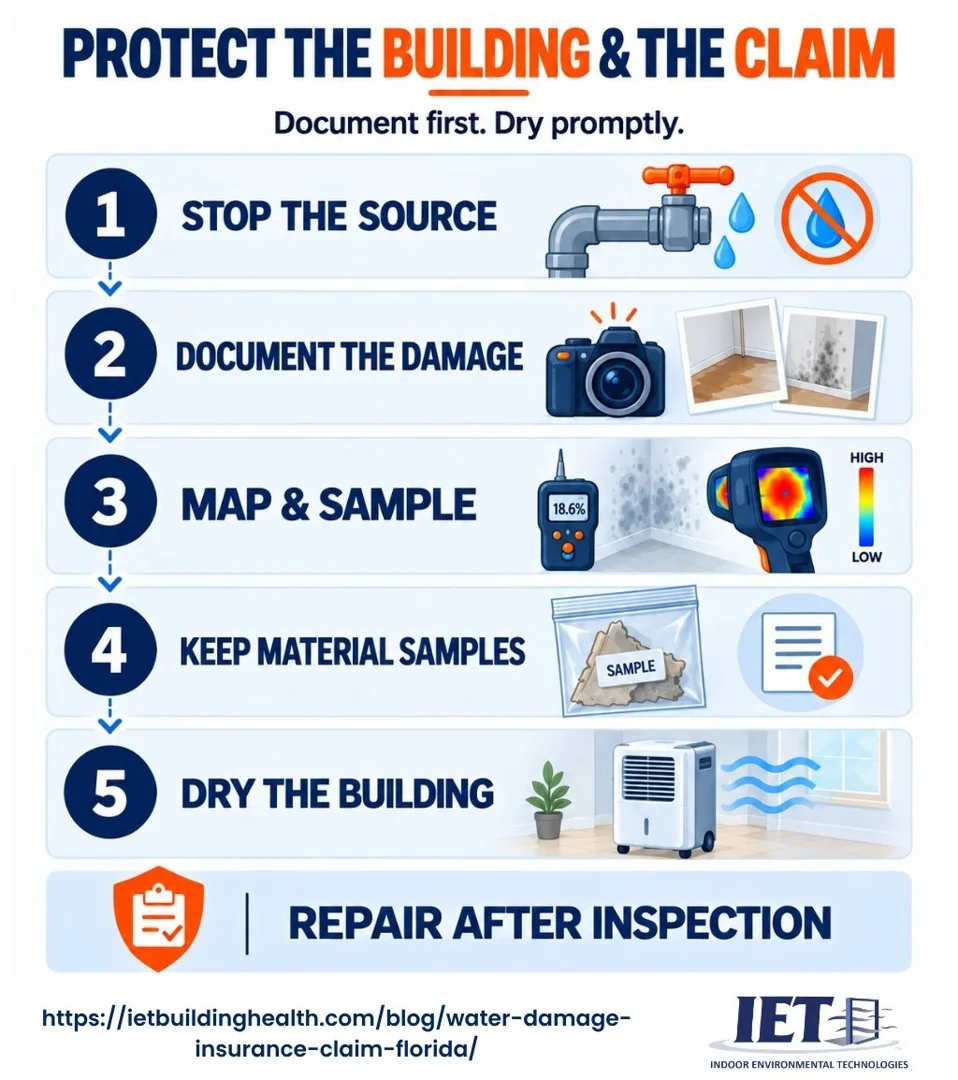
The Steps in Order
- Stop the water source if it’s safe to do so.
- Photograph and record everything while it’s still wet, including the source, the affected rooms, and the path the water took.
- Get moisture mapped and sampled while the readings are active.
- Retain physical samples of removed materials.
- Dry the building.
Permanent repairs remain a separate matter from drying. You can schedule those once the insurer’s inspection is done. Documenting thoroughly right away gives you a permanent record that’ll hold up through the rebuilding process.
Where This Sits Alongside Legal and Claims Advice
Indoor Environmental Technologies documents physical conditions. Decisions about filing, negotiating, appraisal, and litigation belong with a licensed public adjuster or a property insurance attorney. Any questions about your specific policy language also belong with those legal professionals. Two things are still worth knowing on your side of that line.
Deadlines Worth Tracking
Two deadlines remain important to know while you assemble documentation. Under Florida Statute 627.70132, you must provide notice to the insurer within one year of the date of loss to file a claim or reopened claim. For a supplemental claim, the notice must arrive within 18 months. Hidden damage discovered later often leads to supplemental claims, which is another reason to document the full extent early.
Our insurance litigation support service works alongside attorneys and adjusters on disputed claims. Our water damage assessment service covers the documentation described in this guide.
Frequently Asked Questions
Can Testing Prove When a Leak Started?
Testing narrows the timeline down to a range. The contamination category, extent of migration, moisture levels against reference material, and biological growth each point to a range of their own. Read together, those ranges give a documented and reviewable picture of how long the water was present, and that picture might agree with a proposed timeline or point somewhere else.
Should I Wait for the Adjuster Prior to Drying?
Drying promptly generally fulfills what the policy asks of you. Document thoroughly while everything is still wet, keep physical samples of the removed items, and then proceed with drying. You can schedule the permanent repairs once the official inspection is done.
My Insurer Says the Damage Is Long-Term. What Now?
You can request the decision in writing along with the policy language and the supporting evidence. Following that step, you should have the property assessed independently while conditions remain active. A public adjuster or attorney can then advise you on what the decision means for your claim.
Does an Assessment Help if the Claim Is Already Paid?
An assessment helps in this scenario. Supplemental claims exist for damage discovered following the initial estimate, and hidden moisture frequently causes these discoveries. Keep the 18-month filing window in mind.
Is Mold Testing Part of a Water Damage Assessment?
Mold testing frequently plays a role, depending on what the moisture survey uncovers. When growth is present, or conditions suggest it, sampling sent for laboratory analysis identifies the species present.
How Quickly Should Assessment Happen?
We recommend scheduling an assessment within the first few days whenever possible. The contamination category shifts within roughly 24 to 48 hours, moisture levels fall as drying proceeds, and growth develops on its own schedule. Recording an assessment early captures conditions that’ll change on their own.
Get a Professional Assessment You Can Trust
Indoor Environmental Technologies provides moisture mapping, environmental sampling, and documentation for homeowners, businesses, adjusters, and attorneys across Tampa Bay and the Gulf Coast.
When you get in touch, please share the date you discovered the water, the source of the water, and whether any items have been dried or removed. Those three answers help our team determine how quickly an assessment needs to happen and what evidence remains available to recover.
Schedule an inspection or contact our team to talk it through.